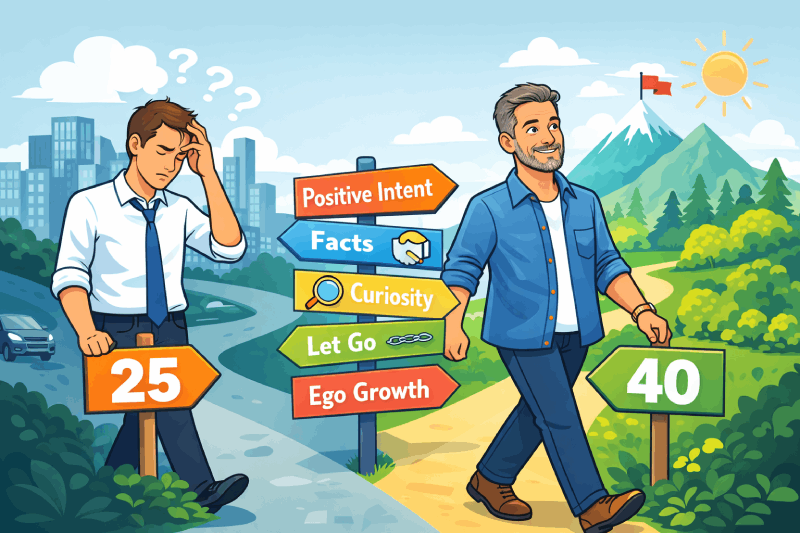

I turned 40 last year, and when I look back on my career and think about what I’ve learned over that time and how I’ve grown, there are certain things that stand out to me as lessons or mentalities I’ve learned that have had, and continue to have, an impact on how I choose to work and live my day to day life.
Always assume positive intent
This one to me is huge - but what does this even mean? It means choosing to believe from the outset that a person’s actions, words or decisions are motivated by good, constructive or at least neutral intentions - even if the outcome of those actions is negative or frustrating for you. It means giving them the benefit of the doubt rather than jumping to negative conclusions or feeling personally attacked. People can FEEL when you have this mindset and it does several things as a side effect:
- It improves your relationships. When you assume others mean well, you’re less likely to jump to negative conclusions and that can lead to more trusting, open and resilient relationships whether you’re at work or at home. People feel more comfortable around someone who they don’t see to be judging them
- It reduces stress and conflict. It lowers your own stress level! Instead of spending time and energy on suspicion or even anger, you’re more likely to seek clarification rather than escalate a situation.
- Increased empathy and understanding. Putting yourself in the shoes of someone else is a mental super power that I feel could even deserve an entire blog post on its own. When you do this you consider perspectives and ideas that you would never have entertained otherwise
- It leads to more constructive problem solving. Focusing on finding a solution instead of assigning blame and negative intention accelerates problem solving and much better collaboration
Don’t make assumptions without having all the facts
Younger Gavsto was guilty of this. It’s easy to get emotional or reactive when something unexpected happens especially if it’s something that has a direct impact on you or people you care about. Drawing conclusions from incomplete data can make you look like an asshole, especially when you’re wrong. This combines well with assuming positive intent because when you go seeking clarification as opposed to assigning blame or jumping to conclusions you are much more likely to have a positive outcome.
Be curious, not judgemental
Straight out of the Ted Lasso playbook (if you’ve not watched this, it’s a must see). Life is not something that is black and white or right vs wrong. It’s much more interesting and nuanced than that and when you adopt this kind of attitude towards everything you learn more, you adapt faster and you ultimately make better decisions.
You don’t need to have an opinion on everything and you don’t always need to prove you’re right
Another thing I was guilty of back in my early 20s. I spent multiple years then on online forums trying to educate people who propagated conspiracy theories about the Moon landing that we did indeed land on the Moon. It took me far too long to realise that there are certain individuals who are so blinded that you could fly them to the Moon, show them the Apollo 11 landing site and they still wouldn’t believe it. Conserve your energy for what actually matters and let go of the need to prove you’re right.
Learn to separate ego from feedback
How many of us have been given negative feedback at work and taken it as a personal attack before? When you do this you miss the ability to mine legitimate criticism because you’re too focussed on defending the noise. No-one is perfect. Growth accelerates when ego steps aside.
)
Start the conversation